MTCY
MTCY is an ECU (Electronic Control Unit) diagnostic application that supports the UDS (Unified Diagnostic Services) and XCP (Universal Measurement and Calibration Protocol) protocols over the CAN communication bus.
By using database files with ODX (Open Diagnostic eXchange) and A2L (ASAM MCD-2 M) extensions, many services supported by the UDS and XCP universal standard protocols can be used. MTCY offers capabilities that greatly simplify examining diagnostic data on the vehicle, engine, or ECU during both factory and service stages, as well as detecting and tracking errors.
The MTCY application provides the following capabilities based on the current user's authorization:
-
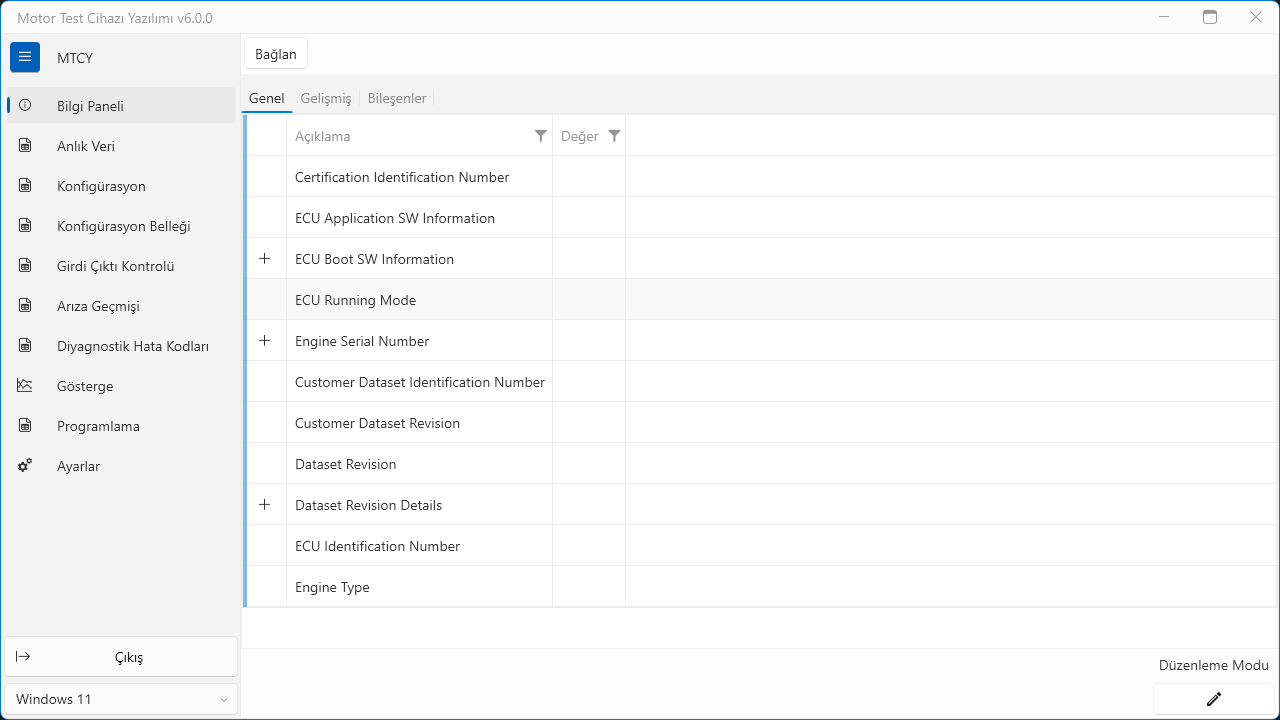
Reading and writing ECU, vehicle, engine, and sensor identifier information
For example, the engine serial number can be read.
-
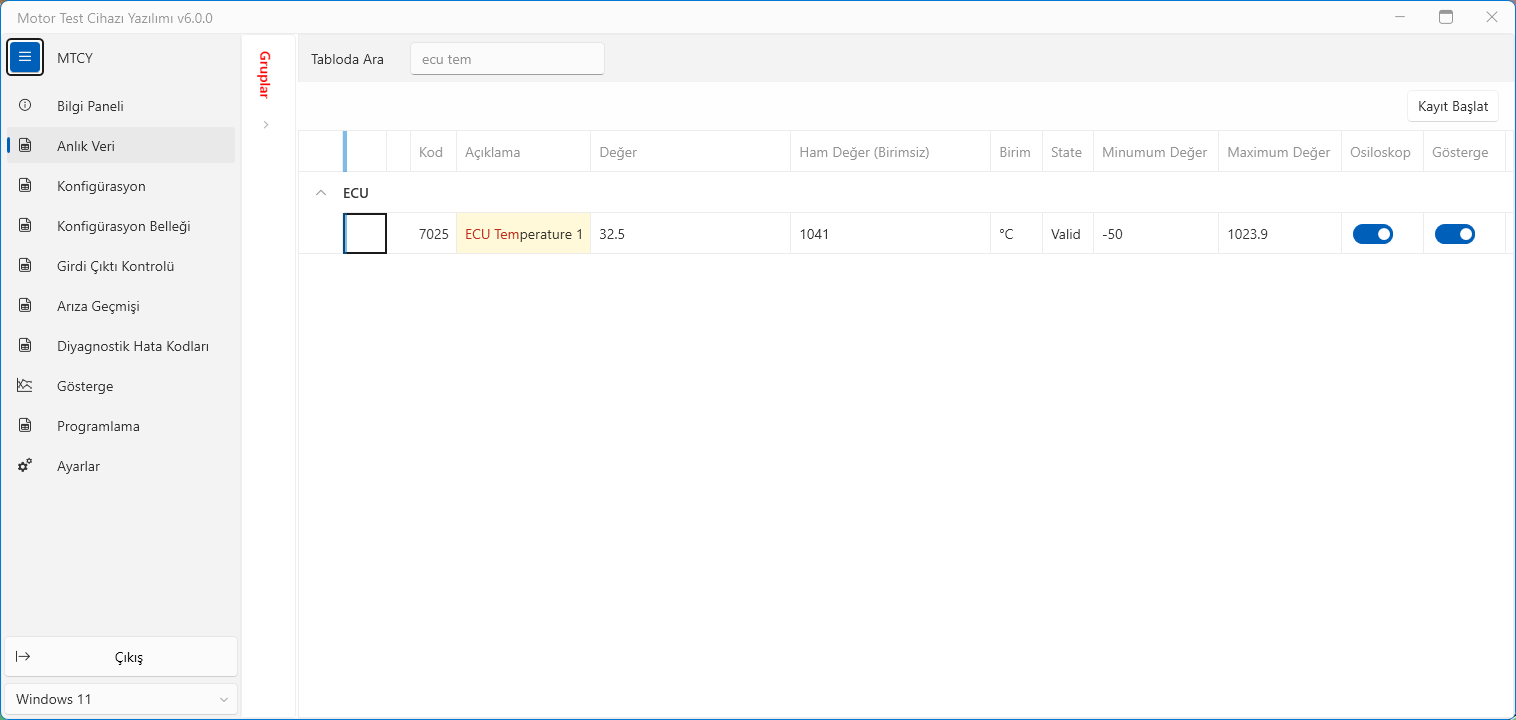
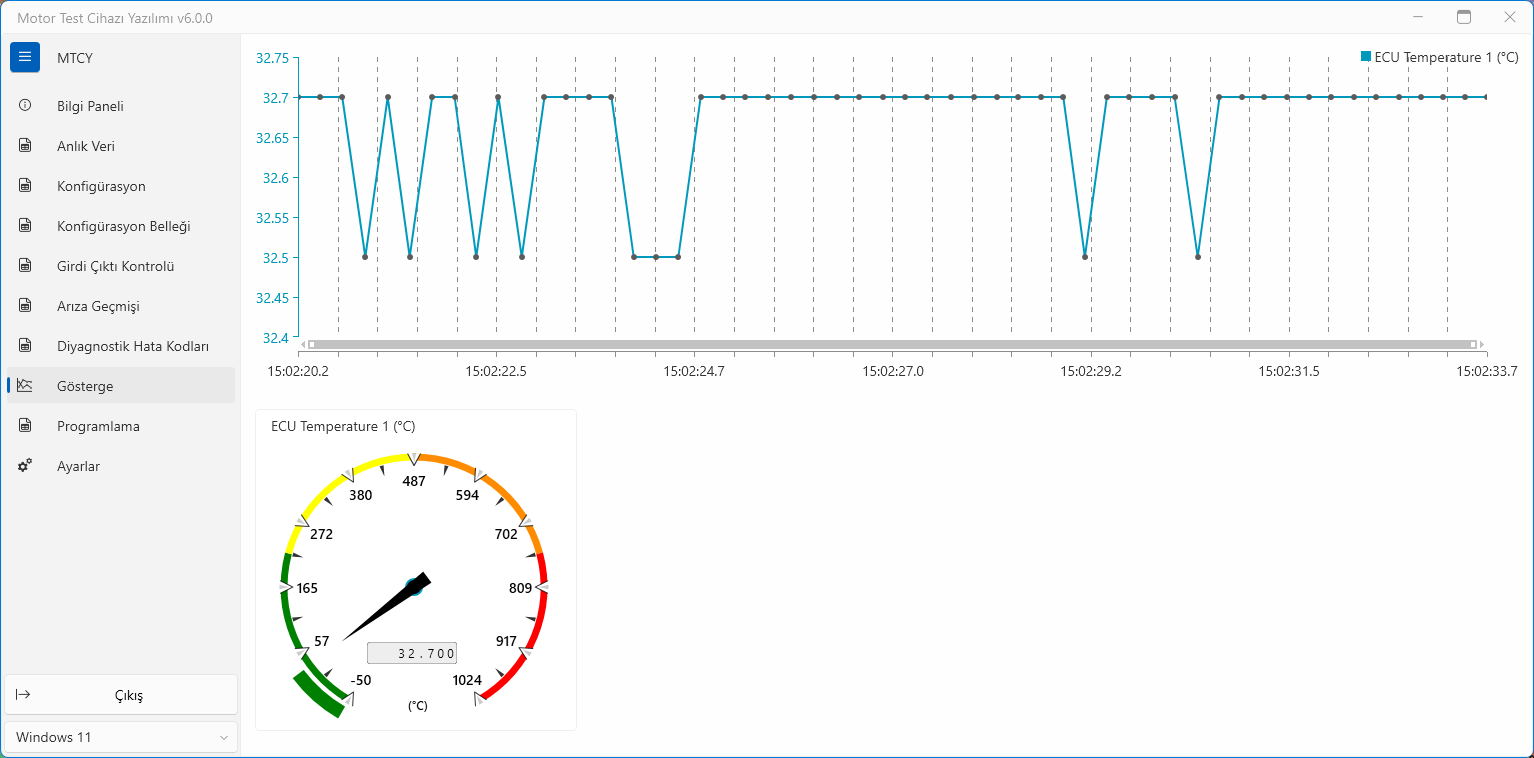
Real-time tracking of sensor data and viewing these values through graphs
For example, the current temperature of the ECU can be measured, and its time-based change can be analyzed through a graph.
- Instant modification of vehicle calibration
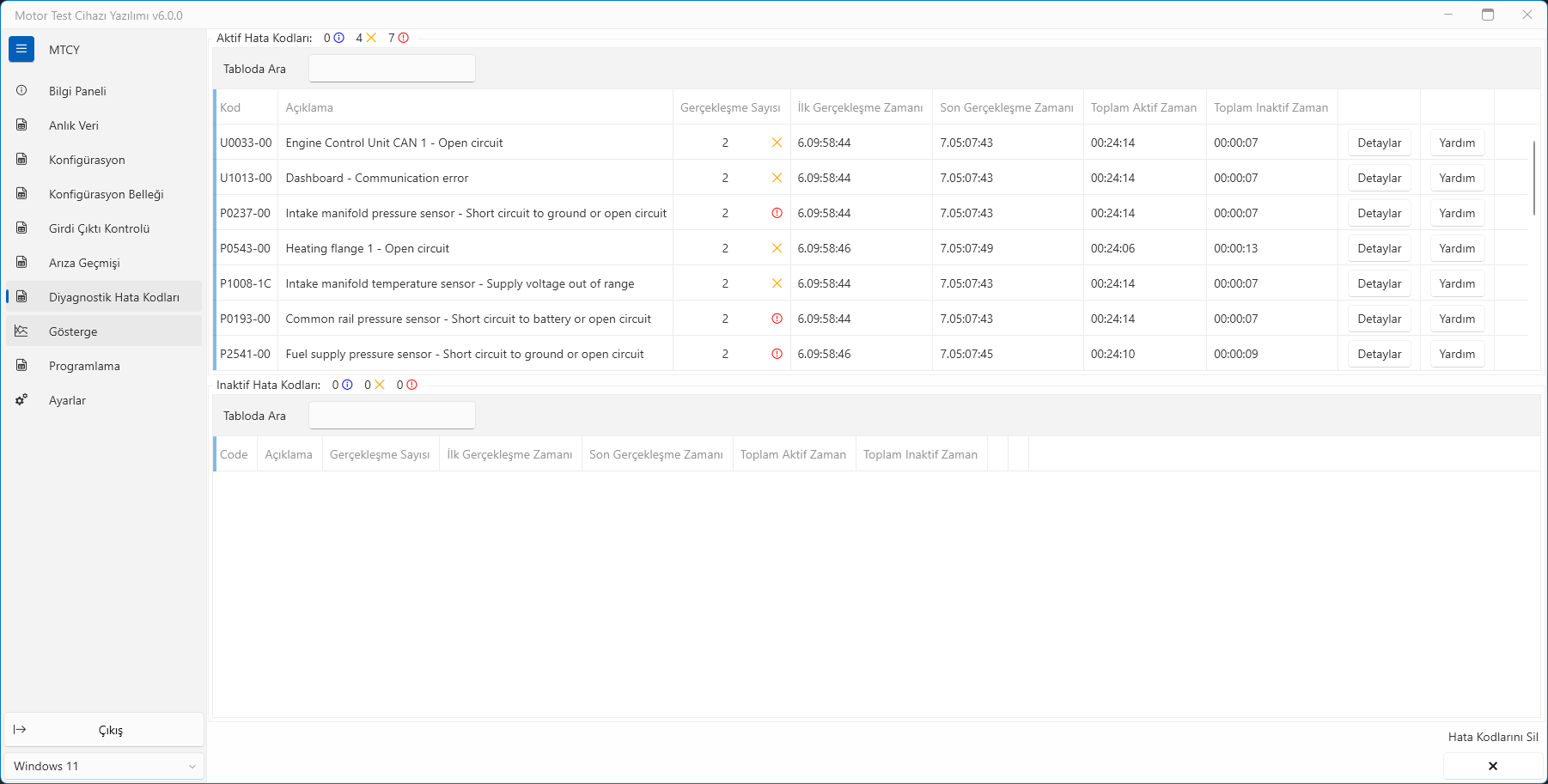
- Tracking diagnostic error codes with details
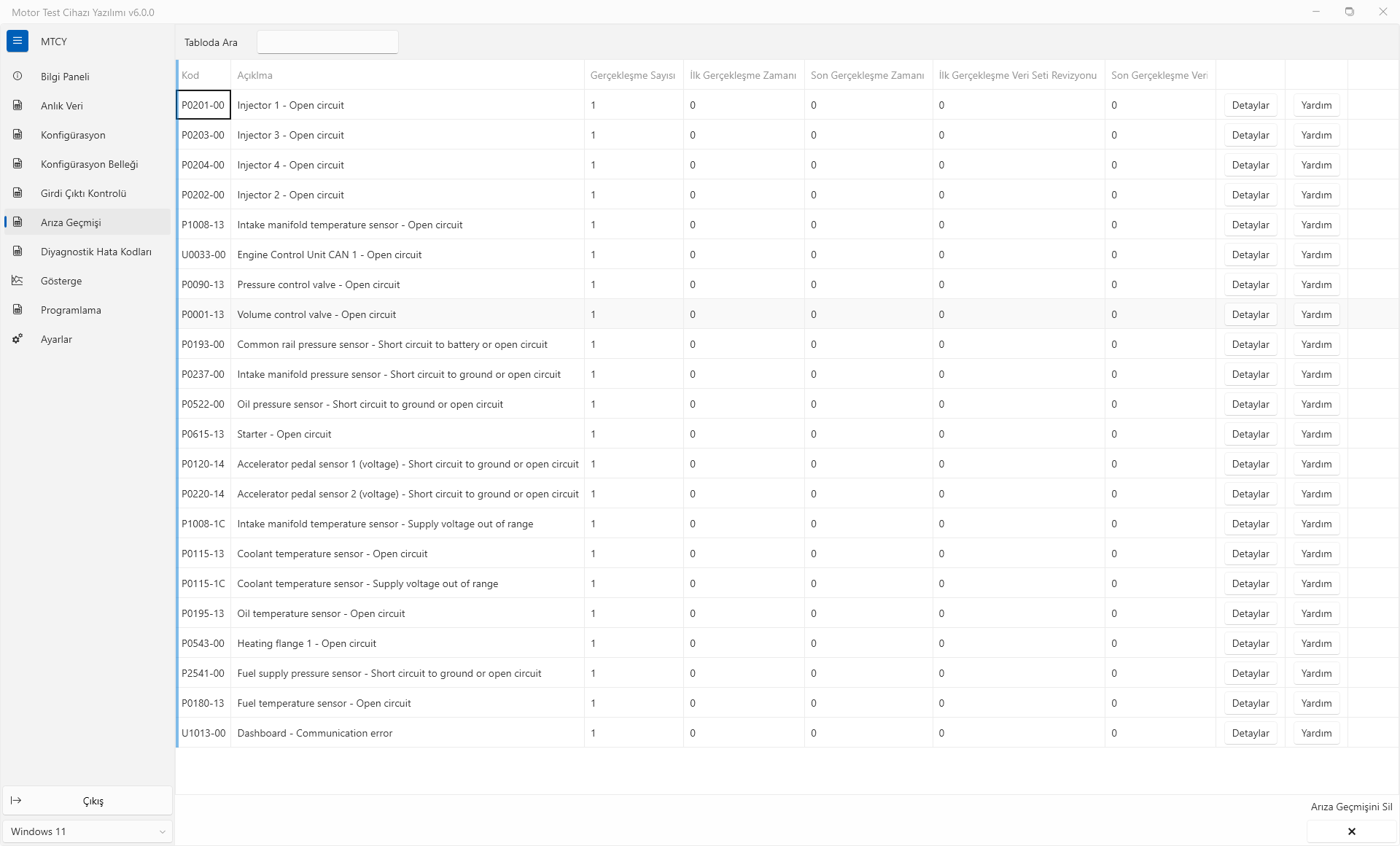
- Tracking recorded fault history with details
For example, if a sensor connected to the engine was temporarily disabled and an error history is recorded in the ECU, this situation can be viewed through MTCY.
-
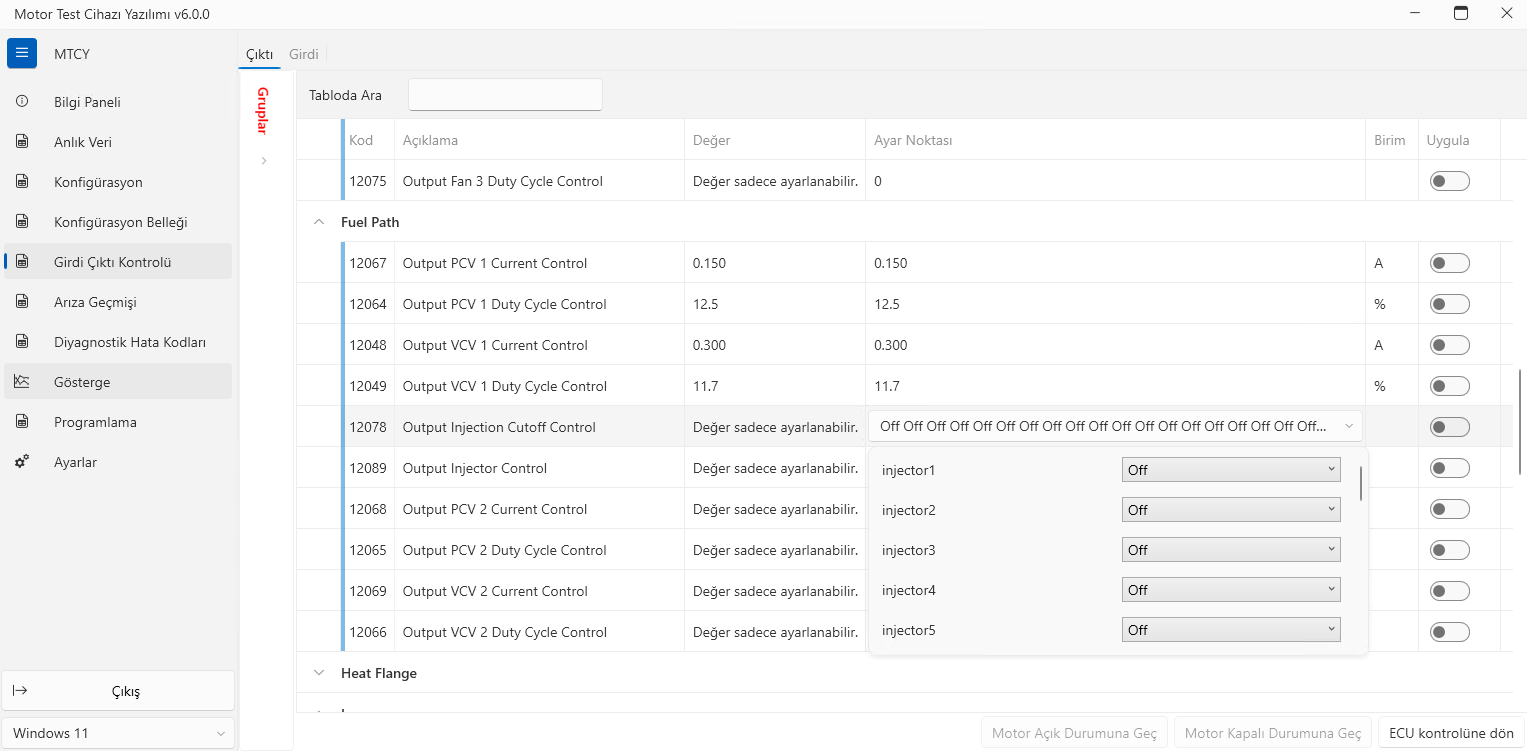
Input-output control of sensors and electronic equipment connected to the engine
For example, the current flowing through the fans on the vehicle can be modified for diagnostic purposes, or even if the oil sensor is not connected, oil sensor data can still be fed to the ECU.
-
Programming of ECU’s permanent memory
For example, ECU software updates can be performed.
-
Adding new users to the application with specific permissions
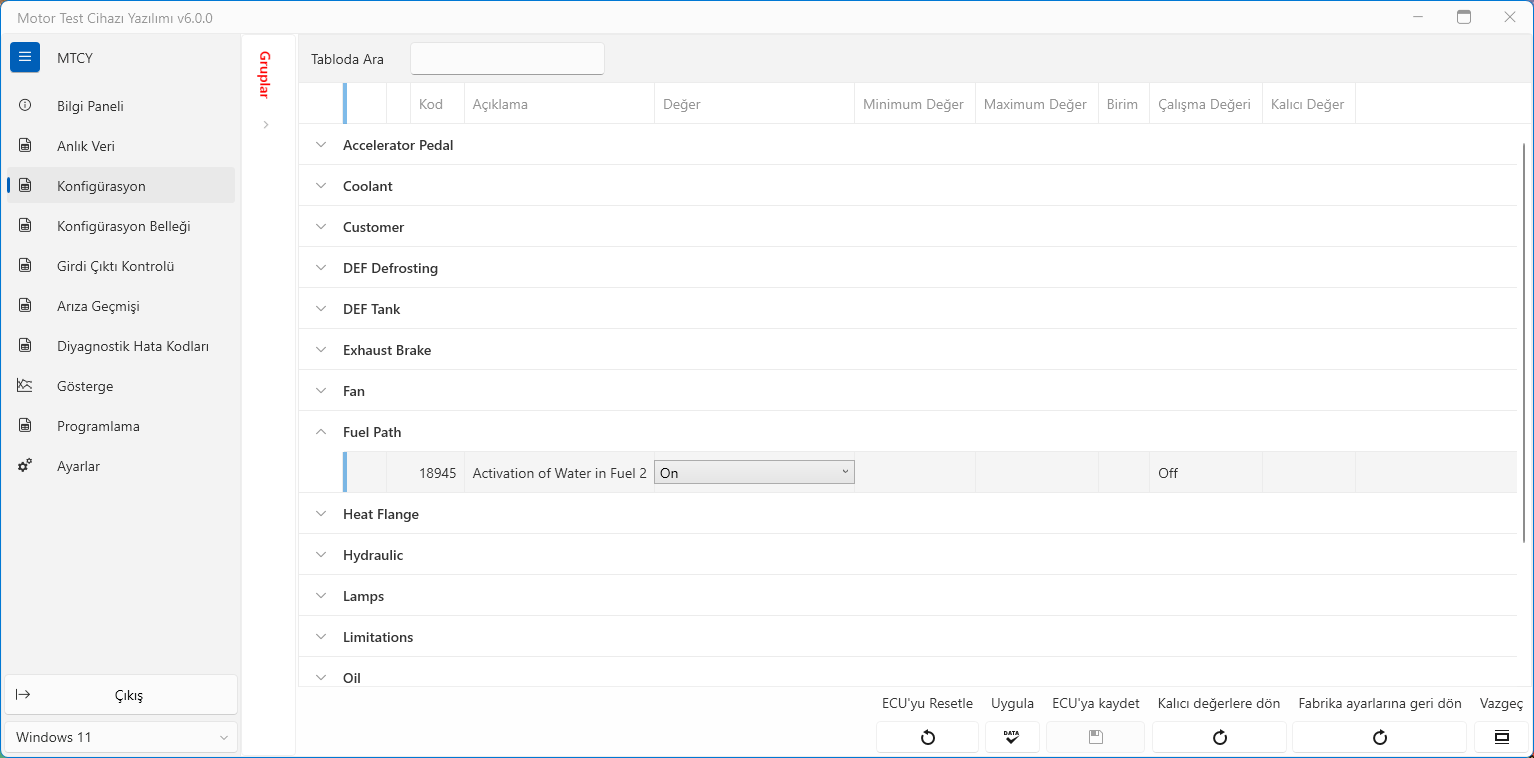
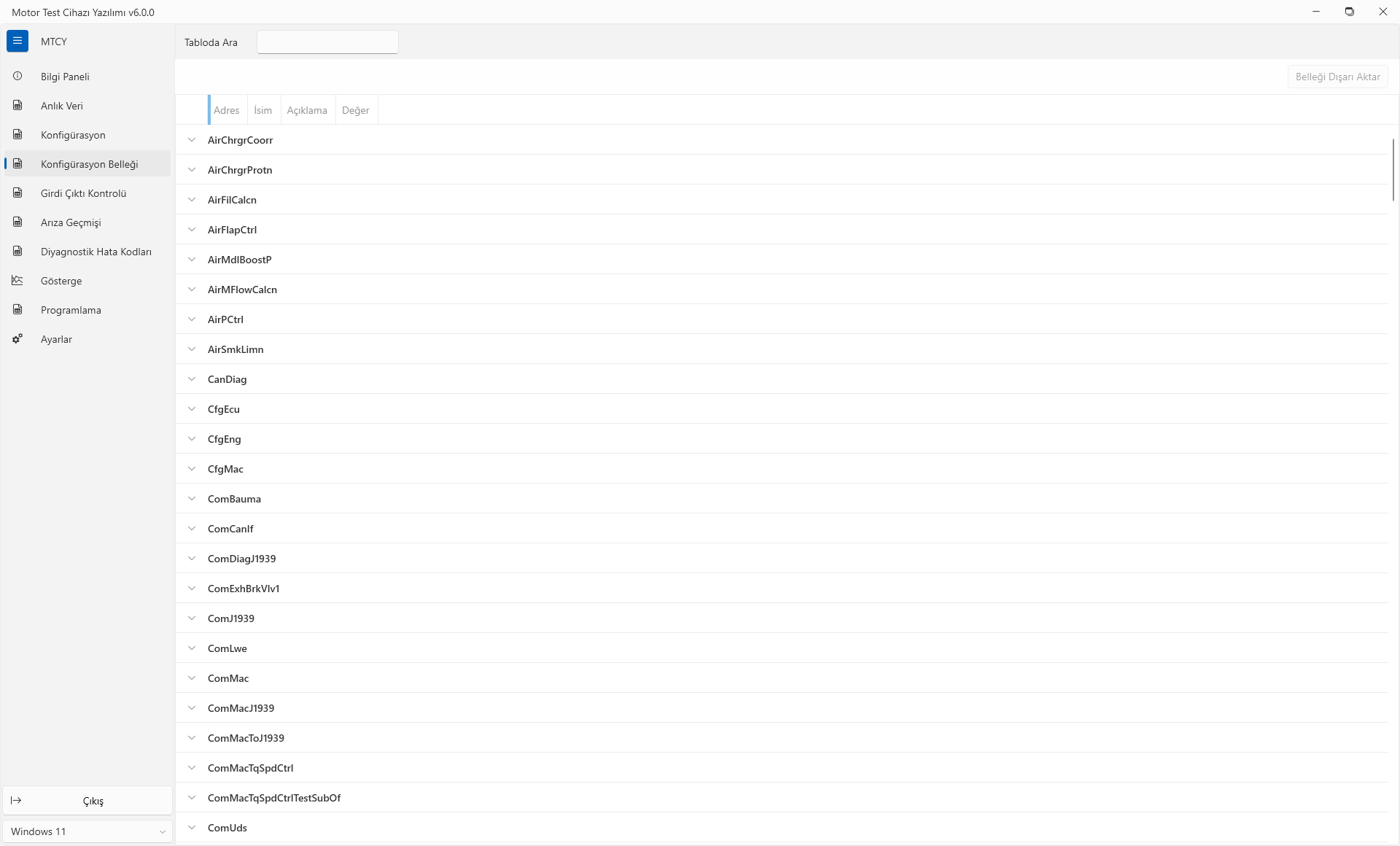
CONFIGURATION/CONFIGURATION MEMORY
Electronically controlled outputs such as actuators, sensors, and engine subsystems on the engine can be tested whether the engine is running or not. For example, injectors can be turned on and off, or the motor fan current can be modified.
Input-related electronic actuators and sensors can be simulated. For instance, even if a temperature sensor that is supposed to be on the engine is not physically present, a temperature value can still be fed to the ECU as input and the vehicle’s response to the fed input can be observed.
DIAGNOSTIC TROUBLE CODES AND FAULT HISTORY